The Lawsuit Lurking in Your Code: Why Indie Developers Face a $10B Risk if AI Finds—and Exploits—Your App's Flaws

Let me tell you a story.
Six months ago, Steve—a fitness coach with zero coding experience—used Lovable to build a meal-planning app. He typed prompts. The AI did the rest. Two weeks later, he had a working iOS app with user accounts, payment processing, and a database storing thousands of customer profiles.
The app went viral. 50,000 downloads in three months. Steve quit his day job.
Then the email arrived: "We've detected unauthorized access to your database." A hacker had exploited an SQL injection vulnerability in his authentication system—a flaw baked into the AI-generated code he'd never reviewed. Customer data was leaked. Credit card details exposed. Within 48 hours, Steve faced a class-action lawsuit and a potential GDPR fine of €500,000.
The AI tool's terms of service? Crystal clear: Not our problem.
Welcome to the dark side of vibe coding.
The Vibe Coding Gold Rush Is Real—And So Is the Liability
If you haven't heard the term "vibe coding" yet, you will. It's the phenomenon of non-technical founders building full-stack apps by describing what they want to AI tools like Replit, Bolt.new, Lovable, Cursor, and v0.dev. No computer science degree required. No understanding of backend architecture, API security, or database design. Just vibes.
And it's working—kind of. These platforms have democratized app development in a way that would've been science fiction five years ago. Type "build me a fitness app with user authentication and Stripe payments," hit enter, and watch the AI scaffold an entire codebase in minutes.
The result? App stores are being flooded with AI-generated apps. Thousands of indie developers are launching products they don't technically understand. The barrier to entry has collapsed.
But here's what the YouTube tutorials and LinkedIn success stories aren't telling you: You're publishing code you can't audit, can't secure, and can't defend in court when it breaks.
And it will break. Because AI-generated code—no matter how impressive—comes with security vulnerabilities that most vibe coders will never spot.
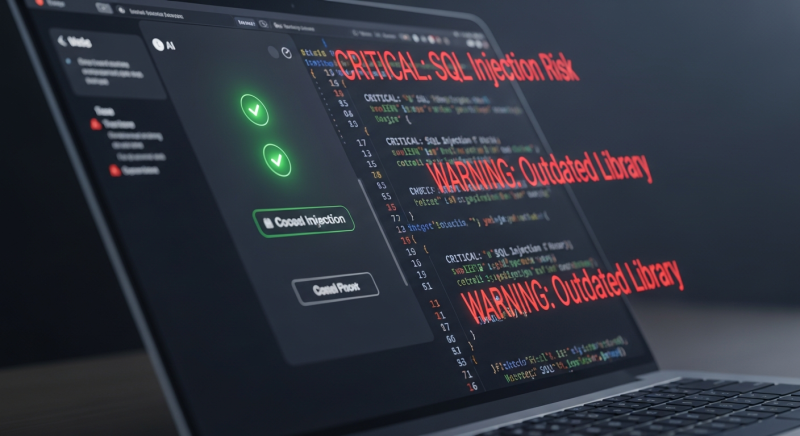
The Security Problem Hiding in Plain Sight
Here's the uncomfortable truth: AI coding tools are trained on billions of lines of code scraped from the internet. That includes a lot of bad code—outdated libraries, insecure patterns, and vulnerability-riddled examples from Stack Overflow circa 2014.
When you prompt an AI to "add user authentication," it might generate code that works beautifully in a demo. But under the hood? It could be using:
- Weak password hashing (MD5 instead of bcrypt)
- SQL injection vulnerabilities (unsanitized user inputs)
- Hardcoded API keys (exposed in client-side code)
- Insecure session management (predictable tokens, no expiration)
- Unvalidated redirects (phishing attack vectors)
The AI doesn't know these are flaws. It's pattern-matching from training data. And unless you're a security expert who can review every line of generated code, you won't know either.
Now remember: In a recent post, we talked about OpenAI releasing Aardvark, an autonomous AI agent that can scan codebases, identify vulnerabilities, and exploit them—all without human intervention. If an AI designed to help developers can find these flaws in seconds, how long do you think it'll take a bad actor with the same technology?
The apps being published by vibe coders today are sitting ducks. And when they get breached, the legal fallout won't land on the AI tool that generated the code.
It'll land on you.
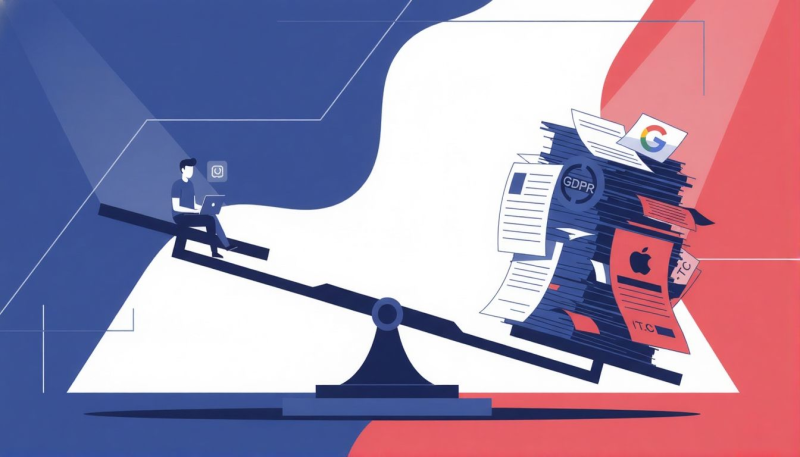
Who Pays When the Code Breaks? (Spoiler: You Do)
Let's talk about liability. Because this is where the vibe coding dream turns into a legal nightmare.
Apple's Developer Agreement makes it explicit: You, the publisher, are responsible for your app's compliance with all applicable laws, including data protection regulations. If your app has a security flaw that leads to a breach, Apple doesn't share the liability. You do.
Google Play's terms are equally clear: Developers must ensure their apps comply with privacy laws and security standards. If user data is compromised, Google may remove your app and terminate your account—but they're not covering your legal bills.
And the AI platforms generating your code? Their terms of service all include variations of the same disclaimer: "We provide tools, not guarantees. You're responsible for testing, securing, and maintaining any code generated."
Translation: When your AI-generated app leaks user data, you're on your own.
Now let's talk numbers. The email Steve got? That's happening across the industry.
The math is brutal:
- 50K+ vibe-coded apps live now
- 1% breach rate = 500+ inevitable lawsuits
- $200K average cost each = $100M total liability
- GDPR fines start at €500K even for small devs
- Class actions: $500K-$10M+ settlements routine
Most indie developers have zero cyber liability insurance.
What Indie Developers Need to Do Right Now
If you've built an app using vibe coding—or you're planning to—here's what you need to know:
1. Audit your AI-generated code before you ship. Use open-source security tools like OWASP ZAP, Snyk, or Semgrep to scan for common vulnerabilities. If you don't know how to interpret the results, hire a freelance security consultant for a one-time review. It'll cost you $500-$2,000. A breach will cost you six figures.
2. Understand what you're signing when you publish. Read Apple's and Google's developer agreements. Know what you're liable for. If your app collects any user data—emails, payment info, location—you're subject to GDPR, CCPA, and other privacy regulations. Ignorance is not a defense.
3. Get cyber liability insurance. Seriously. If your app processes payments or stores personal data, you need coverage for data breaches and legal defense. Policies for small developers start around $1,000/year. It's not optional anymore.
4. Use tools like Aardvark (or competitors) to test your app. OpenAI's autonomous security agent can find vulnerabilities in your code—before the bad guys do. Think of it as an immune system for your codebase.
5. Accept that "it just works" isn't good enough. Vibe coding is a tool, not a shortcut around responsibility. If you're going to publish an app, you need to understand—at minimum—the basics of authentication, encryption, and secure data storage. Take a weekend course. Read OWASP's top 10 vulnerabilities. Learn enough to ask the right questions.

The Genie's Out of the Bottle—So What Now?
Vibe coding isn't going away. The democratization of app development is a good thing—if it's paired with an equal democratization of security knowledge. But right now, we're in a dangerous gap: Tools have gotten powerful enough that anyone can build something complex, but not powerful enough that the built-in safeguards prevent catastrophic mistakes.
The liability is real. The lawsuits are coming. And the developers who treat security as an afterthought—or worse, as someone else's problem—are going to learn expensive lessons.
The smart developers? They're the ones who realize that launching an app is just the beginning. The real work is making sure it doesn't become a liability time bomb.
Because when AI finds your app's flaws—and it will—the only question that matters is: Will it be your AI, or someone else's?
Bangkok8 AI: We'll show you the edge—and how not to fall off it.